Case Study: Improving Extraction System Performance
Environmental Filtration Specialists have recently undertaken a project for one of our valued clients to improve the performance of an extraction system serving their blue coating baths. The operators had noted that the performance of the existing fan was poor, and the harmful fumes and vapours were not being captured effectively. EFS were contacted and immediately got to work developing an upgrade to the existing fan and ductwork to protect the operational team and get production safely back online.
Our specialist team proposed to remove the existing underperforming fan, all external ductwork and discharge arrangements, to be replaced with a compliant solution. The remaining hoods at the baths and internal ductwork were to be kept and utilised, and with some careful calculations and considerations the following solution was proposed:
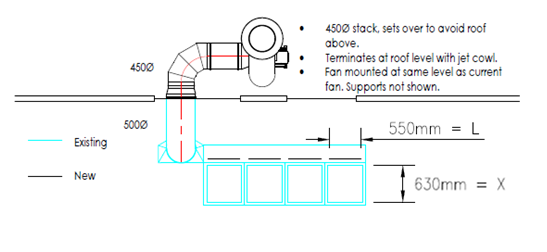
Using the equation: Q = (2.6LVX) x 3600
L = Length of nozzle
V = Extraction velocity required at furthest point (0.5 m/s)
X = Furthest edge of tank
Q = (2.6 x 0.55 x 0.5 x 0.63) x 3600 per nozzle
Qt = approximately 6000 m³/hr total. Tank nozzles may need to be widened.
Induct velocity calculated:
Existing 500Ø duct at 6000 m³/hr = 8 m/s
New 450Ø duct at 6000 m³/hr = 10.2 m/s
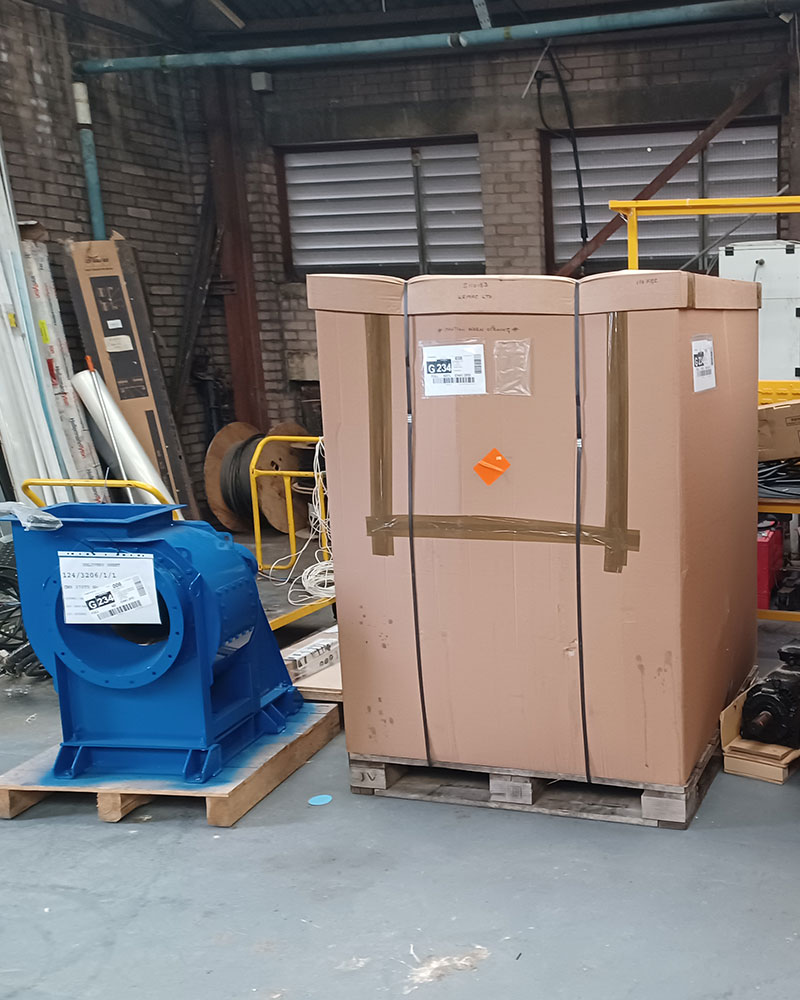
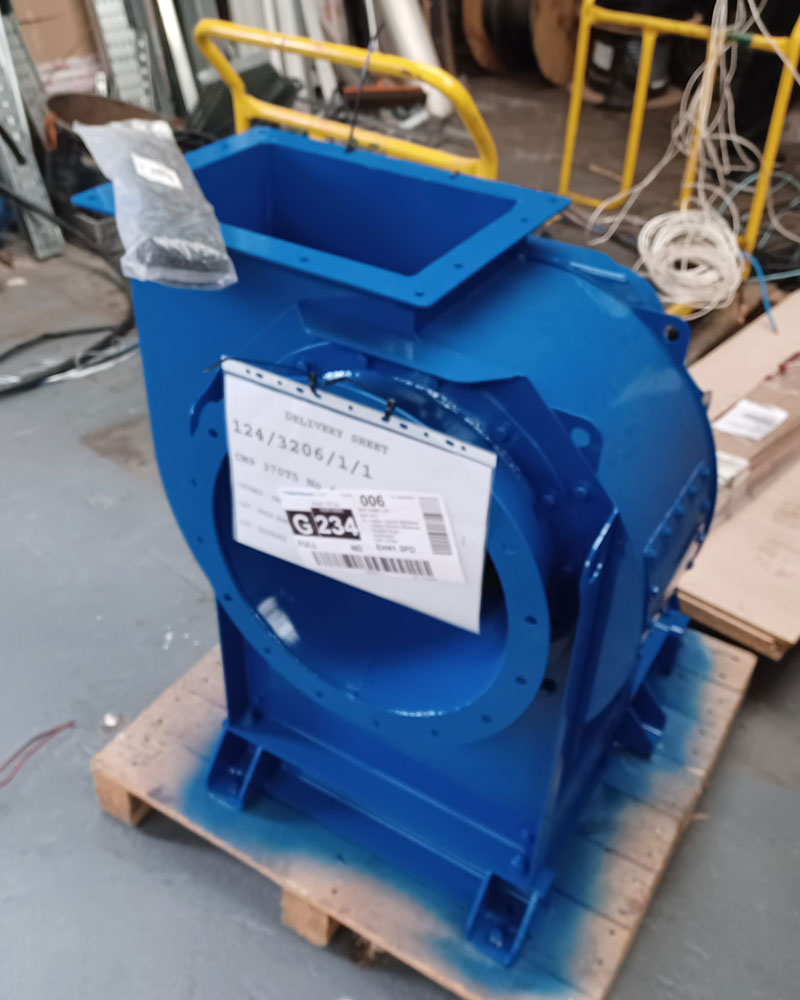
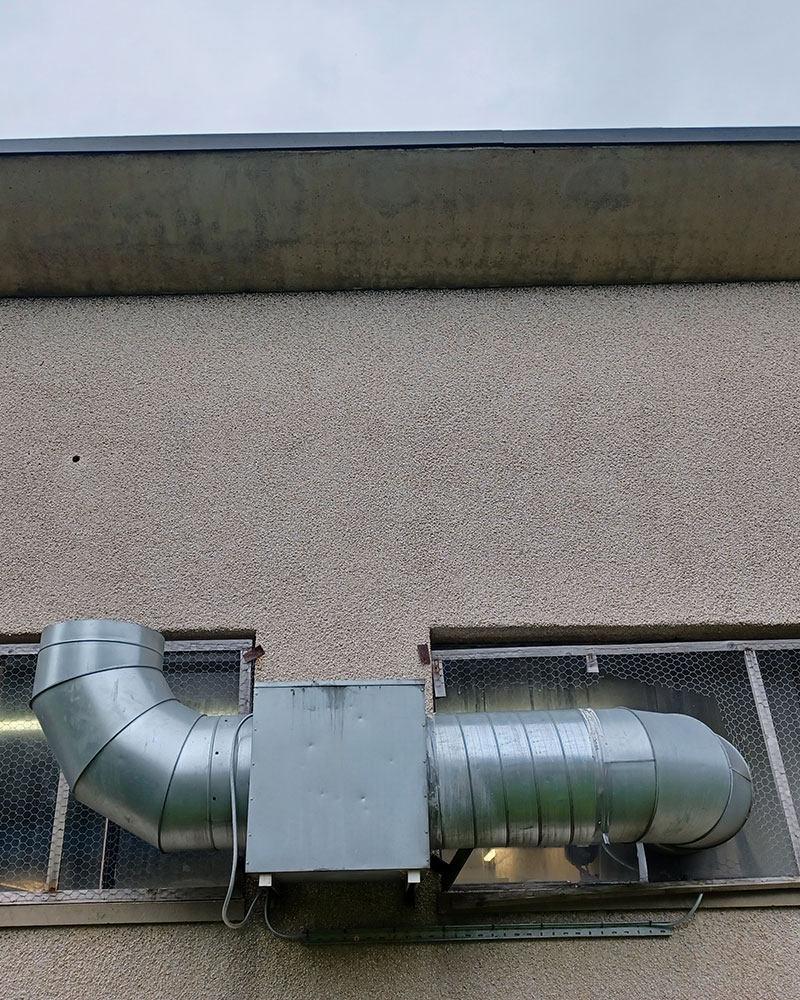
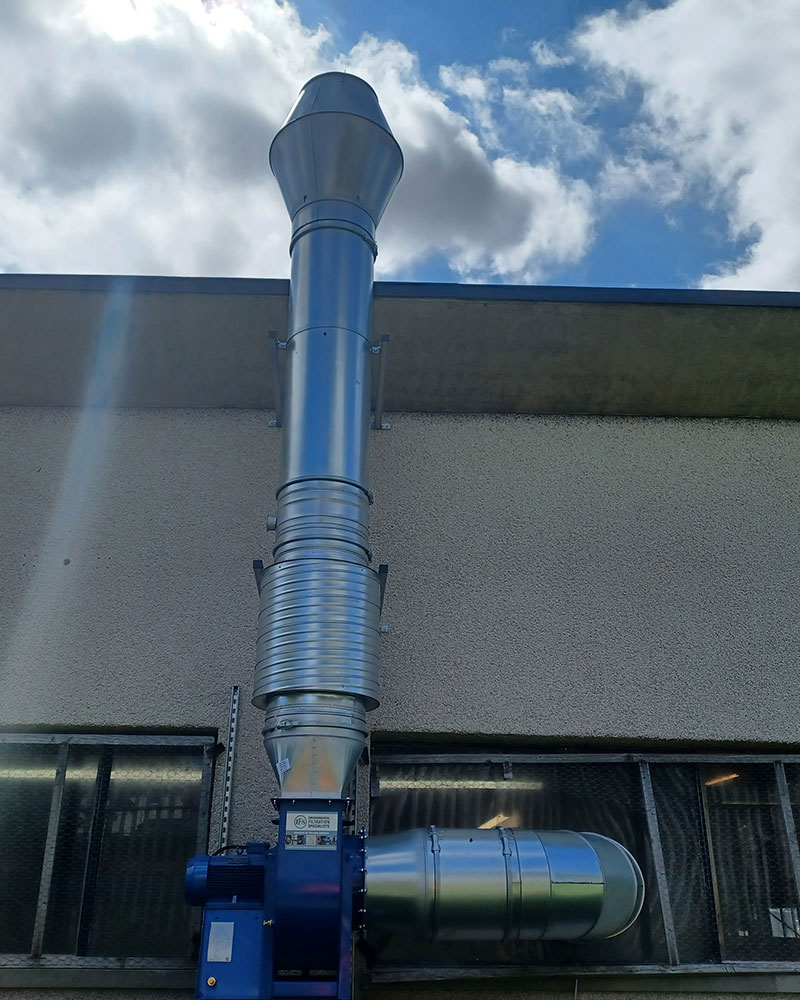
With the design complete, and agreed with the client, our specialist site team got to work. Stage one was the removal of the damaged external ducting, under-performing bifurcated fan and non-compliant discharge arrangement. Once this was complete, the transition piece could be installed to the existing ducting to downsize to the 450 Ø smoothbore galvanised QF ducting. This was then connected to the newly installed IE3 rated CM9 370 T5 centrifugal fan located and secured at high-level to allow for a straight connection into the fan to promote laminar airflow.
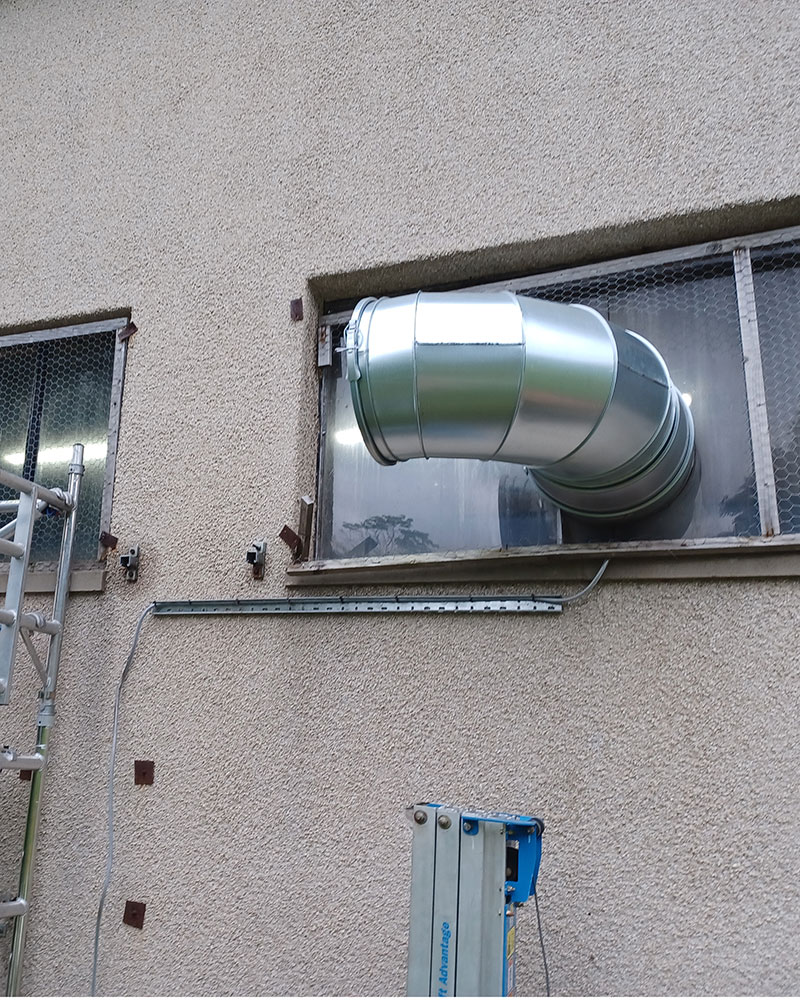
The final installation stage was to extend the stack outlet from the fan, to allow the cleaned air to discharge to atmosphere above the boundary layer. The discharge was fitted with a compliant Jet cowl arrangement to ensure a satisfactory discharge velocity.
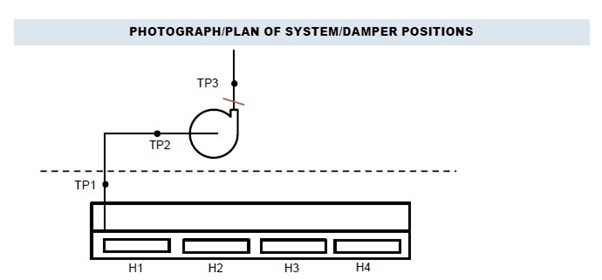
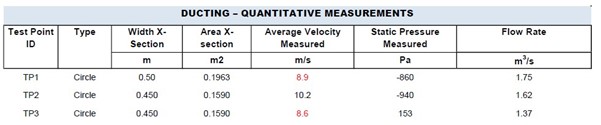
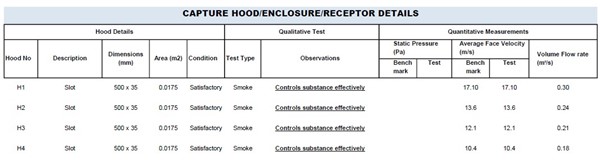
Once the system was safely wired up, the commissioning of the system was carried out on the same day, ensuring the client team could get production up and running without delay. Quantitative and qualitative measurements were taken across the system to set a benchmark for future tests and to ensure the performance of the system was operating as designed. As you can see from the data collected below, the system performs well, with improved effectiveness and control at all hoods, leaving the system’s operational team happy and safe.
Project photos:

Contact our friendly, professional EF Specialists team via our contact form or give us a call if you’d like to find out more, or if you’d like to have an informal discussion about how best to upgrade your LEV systems and improve performance.